Understanding the Motorcycle Crash Claims Process
Demystifying Motorcycle Crash Claims: Accident Lawyer Advice
Riding a motorcycle is exhilarating, but riders lack the protection car drivers have — and after a crash, insurance companies often prioritize their own bottom line over an injured rider’s recovery. Here’s how a motorcycle crash claim actually works, from cause to compensation.
Common Causes of Motorcycle Accidents
Car and truck drivers cause a large share of motorcycle accidents through failing to watch for bikes, not checking mirrors or blind spots properly, failing to yield the right of way, speeding, aggressive or distracted driving, and driving under the influence. Drivers can be held liable for injuries caused by swerving into a motorcycle, tailgating, driving too fast for conditions, pulling out in front of a motorcycle at an intersection, or driving impaired.
Motorcyclists can also contribute to accidents — lane splitting, riding without proper safety gear, failing to signal, riding in another driver’s blind spot, or riding impaired. Road hazards like potholes, debris, and slick surfaces add another layer of risk that affects motorcycles far more than cars. Whatever the mix of causes, if someone else’s negligence played a role, it’s worth seeking legal advice right away.
Common Types of Motorcycle Accidents
- Head-on collisions — often caused by a distracted driver drifting into oncoming traffic, and frequently fatal
- Dooring — a parked car’s driver opens a door without checking for a passing motorcycle
- T-bone accidents — happen at intersections when a car fails to yield to a motorcycle
- Backing accidents — a driver fails to check for a motorcycle while backing out of a driveway or parking space
- Rear-end accidents — a car striking a motorcycle from behind can throw the rider off the bike entirely, causing severe injuries even at moderate speed
How the Claims Process Actually Works
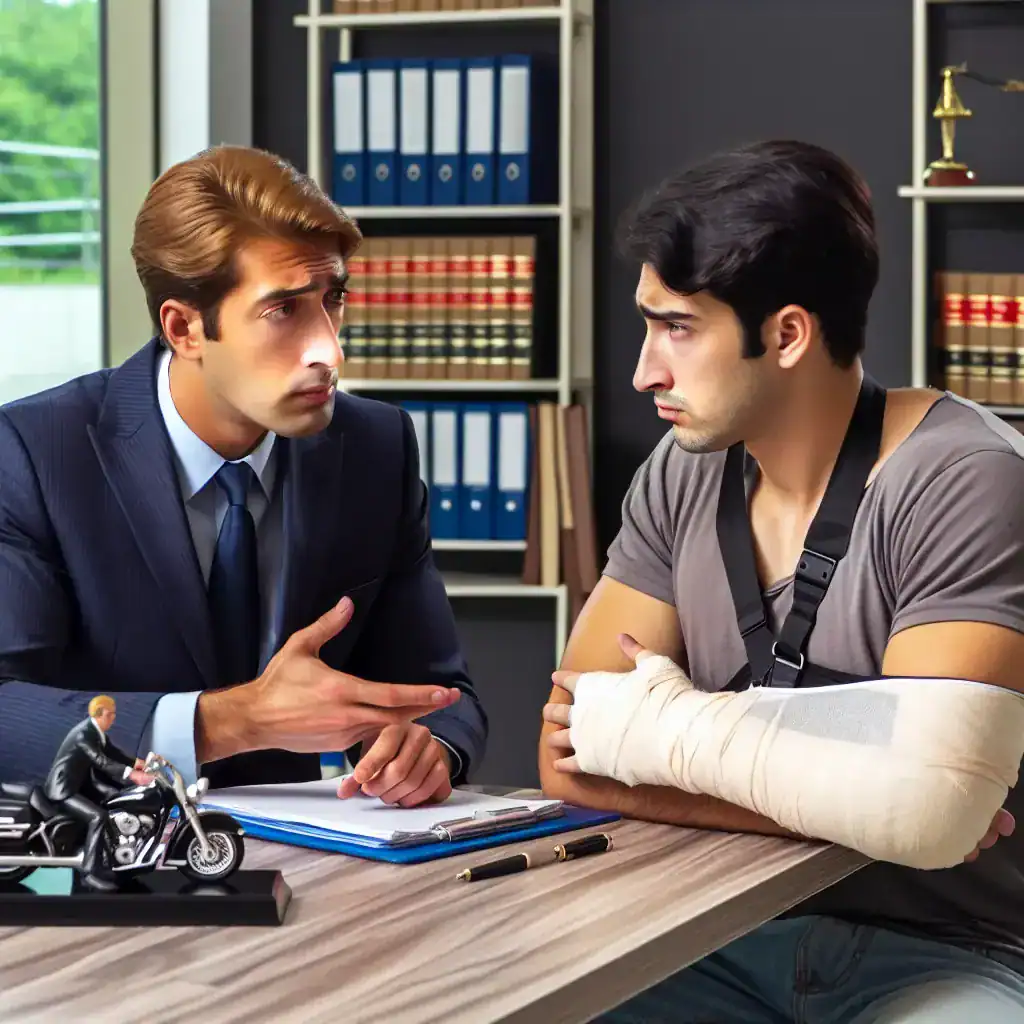
It starts with an initial consultation, where you share the details of the accident, provide whatever evidence you have, and get an honest assessment of your case’s strength along with a clear explanation of next steps. From there, the real work of evidence gathering begins: police reports and witness statements, accident scene photographs, medical records, and, where the facts call for it, an accident reconstruction expert.
Establishing liability draws on all of that evidence together — crash scene photos and measurements, police reports, eyewitness accounts, a vehicle’s “black box” data where available, video footage, and detailed medical records connecting the injury to the crash. In parallel, your attorney evaluates the full scope of damages: current and future medical needs, rehabilitation costs, the impact on your ability to earn a living, and property damage to the motorcycle itself.
Insurance negotiations often get complicated in motorcycle cases specifically — especially with multi-vehicle crashes or when uninsured/underinsured motorist coverage comes into play. (For a primer on motorcycle-specific insurance requirements, the Texas Department of Insurance’s motorcycle insurance page is a useful starting point.) Maximizing a settlement means accounting for every accident-related expense, current and future, along with pain and suffering, and pursuing punitive damages in cases of genuinely reckless conduct.
Don’t wait — contact us today
The sooner you reach out, the sooner we can start building your case. Every motorcycle accident is unique, and we provide personalized legal advice tailored to your specific situation — whether you’re dealing with insurance companies, medical bills, or lost wages. Call the Traub Law Office at (512) 246-9191 or contact us online for a free consultation.
About Rick Legal Posts | Austin Accident Lawyer
