
Austin Police Brutality and Excessive Force Lawyer
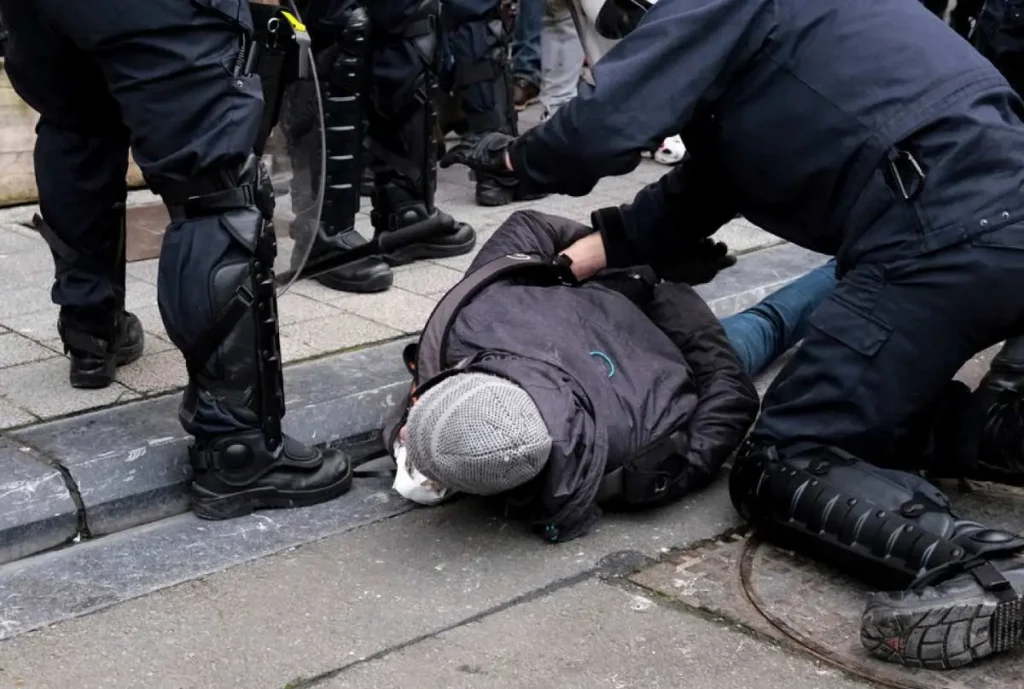
Police brutality claims in Austin and across Texas
When a police officer, deputy or jailer uses force that the law does not allow, the person hurt can sue for the harm it caused. Andrew Traub represents people injured by police, and families of people killed by police, in Texas state courts and the federal courts in Texas. This page explains how those claims work, what they can recover, and the deadlines that apply.
Understanding Police Brutality
Police brutality refers to the excessive use of force by law enforcement. It can take many forms, including physical assault, verbal abuse, racial profiling, and psychological intimidation, and in the most severe cases it results in wrongful death. It’s a significant public concern nationally, and Austin has had its own high-profile cases.
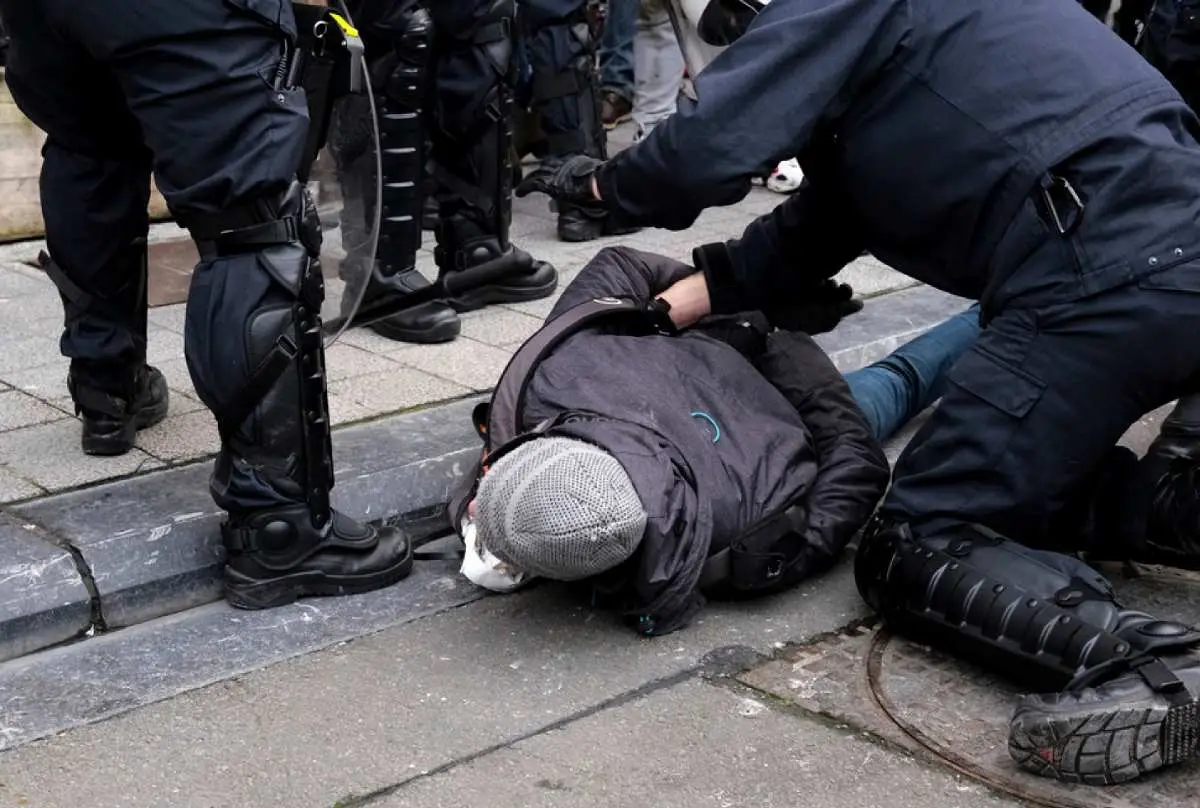
Recent Police Brutality Cases in Texas
Two cases in particular shaped public understanding of this issue in Austin. In April 2020, Mike Ramos, an unarmed Black and Latino man, was fatally shot by an Austin police officer while seated in his car, leading to widespread protests and calls for reform. That same summer, Justin Howell, a Texas State University student, suffered a serious brain injury when he was struck in the head by a “less-lethal” beanbag round fired by police during a protest. Both cases remain touchstones in ongoing conversations about accountability and use-of-force policy in Austin.
The legal landscape around these cases is also shifting. In May 2025, the U.S. Supreme Court ruled unanimously in Barnes v. Felix that courts evaluating a police shooting must consider the “totality of the circumstances” leading up to the use of force — not just the final seconds before it happened. That shift matters directly for how future excessive force cases, including in Texas, get argued and decided.
Why These Cases Run Through Federal Law, Not Ordinary Texas Injury Law
This is the part most people don’t expect: Texas’s own state law limits your options. The Texas Tort Claims Act waives governmental immunity only in narrow circumstances, and it specifically excludes intentional torts — including assault and battery, which is what excessive force legally is — from that waiver. In practice, that means an ordinary state-law personal injury claim against a police department usually doesn’t work.
That’s why almost every viable police brutality case is instead brought under federal law — specifically 42 U.S.C. § 1983, part of the Civil Rights Act of 1871 — which allows you to sue an officer, and in some cases the city or department itself, for violating your constitutional rights while acting under color of law. This is a genuinely different legal track than a typical injury case, with its own court system, its own procedural rules, and its own central defense: qualified immunity, a doctrine that shields officers from liability unless their conduct violated a constitutional right that was already “clearly established” by prior case law. Overcoming it is usually the central fight in any police brutality case.
Hurt in a police chase or a crash with a police car
A crash caused by a police driver is not an excessive force case. It is a negligence claim, and Texas law handles it differently. The Texas Tort Claims Act allows claims against a city, county or the state for injury or death caused by an employee’s negligent use of a motor vehicle (Texas Civil Practice and Remedies Code § 101.021). The Act does not apply if the officer was responding to an emergency and followed the laws that govern emergency driving. Where no such law applies, it does not apply unless the officer acted with conscious indifference or reckless disregard for the safety of others (Texas Civil Practice and Remedies Code § 101.055).
Two more limits matter early:
- Damage caps. A city’s liability is capped at $250,000 per person and $500,000 per occurrence for bodily injury or death. Other local governments have lower caps (Texas Civil Practice and Remedies Code § 101.023).
- Notice. The government is entitled to notice of the claim within six months of the crash, and a city’s charter can set a shorter period (Texas Civil Practice and Remedies Code § 101.101).
Legal Claims Available for Victims
- Civil Rights Claims: Filed under Section 1983 of the Civil Rights Act, these are the primary path for most police brutality victims, addressing violations of constitutional rights by law enforcement.
- Personal Injury Claims: Where governmental immunity doesn’t bar the claim — for example, against a private security contractor, or in limited circumstances involving negligence rather than intentional force — a personal injury claim may cover medical expenses, lost wages, and pain and suffering.
- Wrongful Death Claims: If police brutality causes a death, surviving family members can pursue a wrongful death claim for the family’s own losses.
When police force causes a death in Texas
When someone dies after police use force, the family’s case usually has two parts. The federal civil rights claim under 42 U.S.C. § 1983 is about the violation of the person’s constitutional rights. Where federal civil rights law is silent, federal courts apply the law of the state, so long as it is not inconsistent with federal law (42 U.S.C. § 1988(a)). The Supreme Court has held that this includes state rules on whether a claim survives the person’s death (Robertson v. Wegmann (1978)). Families in Texas also have two state-law claims:
- A wrongful death claim for the family’s own losses, which belongs to the surviving spouse, children and parents (Texas Civil Practice and Remedies Code § 71.004).
- A survival claim for the losses the person suffered before death, which passes to the estate and heirs (Texas Civil Practice and Remedies Code § 71.021).
The Supreme Court’s 2025 decision in Barnes v. Felix came from a Texas case. It was brought by the mother of the man who was killed, both for herself and as representative of her son’s estate.
Learn more about who can bring a death claim in Texas on our Austin wrongful death lawyer page.
Excessive force in Texas jails
People held in a county jail before trial are protected too. To win an excessive force claim, a pretrial detainee must show that force purposely or knowingly used against them was objectively unreasonable. They do not have to prove the jailer meant the force to be excessive (Kingsley v. Hendrickson (2015)). For force used during a stop or an arrest, the Fourth Amendment test is whether the force was objectively reasonable from the point of view of a reasonable officer at the scene (Graham v. Connor (1989)), judged on the totality of the circumstances, including what led up to it (Barnes v. Felix (2025)).
Who Can File a Section 1983 Claim in Austin?
Section 1983 claims empower individuals to hold government officials accountable for violating their constitutional rights. This includes:
- Victims of excessive force, unlawful arrest, or other misconduct by law enforcement or government representatives
- Cases where government officials acted within their official capacity while abusing their power and compromising individual rights
Who Can Be Sued Under Section 1983?
Section 1983 applies to a broad range of government officials, including:
- Law enforcement personnel, from officers to administrators
- Corrections staff, including jail and prison officials
- Public educators and administrators
- Municipal and state employees
- Anyone wielding government authority who violates constitutional rights
Holding the department or municipality itself liable — not just an individual officer, who often has limited resources to pay a judgment — typically requires showing the misconduct reflects an official policy, a pattern the department tolerated, or a documented failure to train or supervise. That’s why a thorough investigation into an officer’s and department’s history is often as important as the incident itself.
What to Do If Your Constitutional Rights Are Violated
- Document every detail — dates, times, witness information, and any video — as soon as it’s safe to do so
- Seek medical attention if you’re injured, and keep a record of treatment and expenses
- Preserve video evidence quickly; body camera footage in particular is often retained only for a limited period
- Consult with an attorney experienced in Section 1983 claims and qualified immunity before giving a statement to internal affairs or the department
Compensation in Police Brutality Cases
Victims of police brutality in Austin can pursue several types of damages through a civil claim. Economic damages cover objective financial losses — medical bills, surgery and rehabilitation costs, ongoing therapy, lost wages, and diminished future earning capacity. Non-economic damages address the less tangible but equally real harm: physical pain and suffering, emotional distress, and loss of enjoyment of life. In a proper case, a jury can also award punitive damages against the individual officer (Smith v. Wade (1983)). Punitive damages are not available against a city under § 1983 (City of Newport v. Fact Concerts (1981)). If you win, the court may also order the defendants to pay your reasonable attorney’s fees (42 U.S.C. § 1988(b)).
The overall value of a case depends on the severity of the misconduct, the extent of your injuries (physical and psychological), your medical costs and recovery, the impact on your daily life and ability to work, and the strength of the evidence connecting the misconduct to your harm. No two cases are identical, and an experienced attorney works with medical professionals, financial specialists, and care planners to fully document every category of loss.
How long do you have to file a police brutality lawsuit in Texas?
Most police brutality lawsuits in Texas must be filed within two years. Federal courts use the state’s general personal injury deadline for § 1983 claims (Owens v. Okure (1989)), and in Texas that deadline is two years (Texas Civil Practice and Remedies Code § 16.003). For a Texas wrongful death claim, the two years run from the date of death (Texas Civil Practice and Remedies Code § 16.003). When a federal claim’s clock starts is a separate question, so ask a lawyer early.
Claims under the Texas Tort Claims Act, such as a crash with a police car, also need notice to the government within six months, or sooner if a city’s charter says so (Texas Civil Practice and Remedies Code § 101.101). State notice rules like this do not apply to a federal § 1983 claim (Felder v. Casey (1988)), but they can decide any state-law claim filed alongside it.
Video evidence can be overwritten, so ask a lawyer about preserving it as soon as you can.
Why call the Traub Law Office
- Andrew Traub founded the firm in 2003.
- We prepare every case as if it is going to trial.
- No fee unless we recover for you.
- Your first consultation is free.
- We take police brutality cases in Texas state courts and the federal courts in Texas.
Contact an Austin Police Brutality Lawyer Now
The Traub Law Office is ready to provide dedicated legal guidance for police brutality victims. Call us at (512) 246-9191 or fill out our form for a free, confidential consultation.