
18-Wheeler and Truck Accident Lawyer
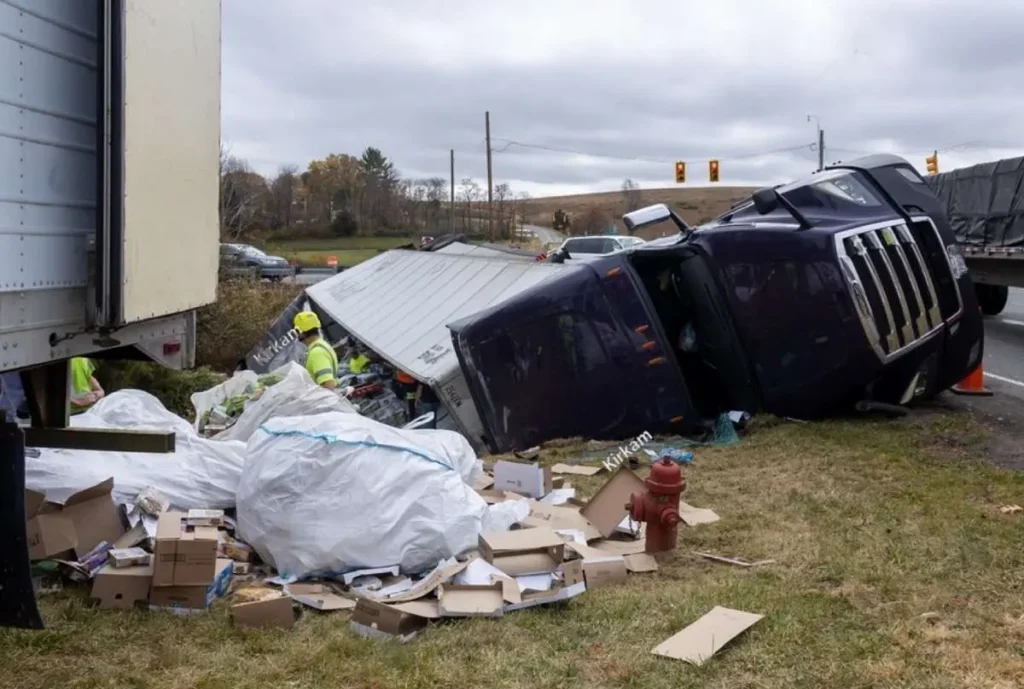
An 18-wheeler on I-35, US-183, or the rest of the Austin corridor weighs up to twenty times what a passenger car does — a fully loaded semi truck can top 80,000 pounds. When one of them is involved in a crash, the injuries are rarely minor — and the case is almost never simple. You’re not dealing with one driver’s insurance company; you’re dealing with a trucking company, its insurer, and often a separate company that owns the truck or hauled the cargo, each with their own lawyers working to limit what they pay.
Who Can Be Held Responsible
Truck accident liability is rarely limited to the driver. Depending on what caused the crash, any of the following may share responsibility:
- The truck driver — for speeding, distraction, fatigue, impairment, or violating traffic and trucking laws
- The trucking company — for pushing drivers past legal hours-of-service limits, or failing to enforce safety rules
- The truck’s owner — if it’s a separately-owned vehicle with known maintenance issues
- The manufacturer — if a defective part, like brakes or tires, contributed to the crash
- The company that loaded the cargo — if improperly secured cargo caused a rollover or loss of control
- Maintenance providers — if deferred or inadequate repairs contributed to the failure
- A government entity — if poor road design or maintenance was a factor
Texas law allows more than one of these parties to be held liable in the same case, and figuring out who actually bears responsibility is often the difference between a lowball offer and full compensation.
Federal Trucking Regulations Matter to Your Case
Commercial trucking is governed by federal rules most passenger-vehicle drivers never encounter — hours-of-service limits, mandatory vehicle inspections, cargo securement standards, and drug and alcohol testing requirements. When a trucking company or driver violates one of these rules and it contributes to a crash, that violation becomes part of the evidence for your case. We request the driver’s logs, the truck’s black box data, and the carrier’s federal safety record as a matter of course, not as an afterthought.
How a Truck’s “Black Box” Helps Your Case
Like an airplane, most commercial trucks carry an Event Data Recorder (EDR) that logs speed, braking, engine throttle and RPMs, and steering input in the moments before, during, and after a crash. That data can establish whether the truck was speeding or braked too late, corroborate or contradict witness accounts, and directly dispute a driver’s version of events if it doesn’t match what the truck itself recorded. It’s some of the most objective evidence available in a truck accident case — but it’s also frequently overwritten or deleted during normal operations, which is exactly why requesting it early matters. The same applies to negligent repair work or defective parts — faulty brakes, poorly repaired steering, a bad tire installation, or a manufacturing defect can all be the real cause of a crash, and proving it usually requires an expert who can examine the parts and maintenance records directly.
Texas’s Comparative Fault Rule
Texas uses a modified comparative fault system: your compensation is reduced by your percentage of fault, and if you’re found more than 50% at fault, you recover nothing. Insurance companies know this, and it’s common for them to push blame onto the injured party specifically to reduce or eliminate what they owe. That’s exactly why documentation — witness statements, photos, the police report — matters from day one.
When the Trucking Company Itself Is Liable
Liability doesn’t stop at the driver. If a trucking company hired a driver with a known history of violations, failed to supervise a driver who wasn’t following safety rules, or kept a driver on the road after repeated infractions, the company can be named alongside the driver. Investigating a carrier’s hiring and safety record is a routine part of building a serious truck accident case, not a long shot.
What Compensation Can Cover
- Medical expenses, including future treatment and rehabilitation
- Lost wages and lost earning capacity
- Pain and suffering
- Property damage
- Wrongful death damages, including funeral costs and loss of companionship, if a loved one was killed
Wrongful Death Claims
Losing a loved one in a truck accident is devastating, and Texas law gives close family members — spouses, children, and parents — the right to file a wrongful death claim against the responsible parties. A wrongful death claim can cover funeral and burial expenses, the loss of your loved one’s income and financial support, and the emotional pain and suffering the loss has caused your family. These claims carry their own statute of limitations, so acting promptly matters just as much here as it does in an injury claim — both to preserve your rights and to gather the evidence, like accident reports and witness statements, before it disappears.
After a Truck Accident: What to Do
- Call 911 and get medical attention, even if you feel fine — some injuries don’t show symptoms right away
- Document the scene: photos of the vehicles, the road, and any visible injuries
- Get contact information from the driver, witnesses, and anyone else involved
- Be cautious talking to insurance adjusters before you’ve spoken with a lawyer — they’re not on your side
- Contact a truck accident lawyer promptly; evidence like dashcam footage and driver logs can disappear quickly
Why The Traub Law Office?
Truck accident cases move fast in the first days after a crash — trucking companies often send their own investigators to the scene within hours. We move just as fast, and you’ll be working directly with an attorney, not passed off to a case manager. We take these cases on contingency: no fee unless we recover money for you.
Texas gives you two years from the date of the accident to file a personal injury lawsuit — but the sooner we’re involved, the more evidence we can preserve. If you or a loved one has been hurt in a truck accident anywhere in the Austin area, call the Traub Law Office at (512) 246-9191.