Why Delayed Medical Treatment Doesn’t Automatically Destroy an Injury Case
After a car accident, injured people often hear the same warning: “If you didn’t go to the doctor immediately, your case is weak.”
Insurance companies rely heavily on this argument and adjusters frequently point to gaps in treatment as proof that an injury must not be serious.
But in the real world of accident cases, delayed medical treatment is extremely common — and it doesn’t automatically determine the value or legitimacy of a claim.
Understanding why requires looking at how people actually respond to trauma.
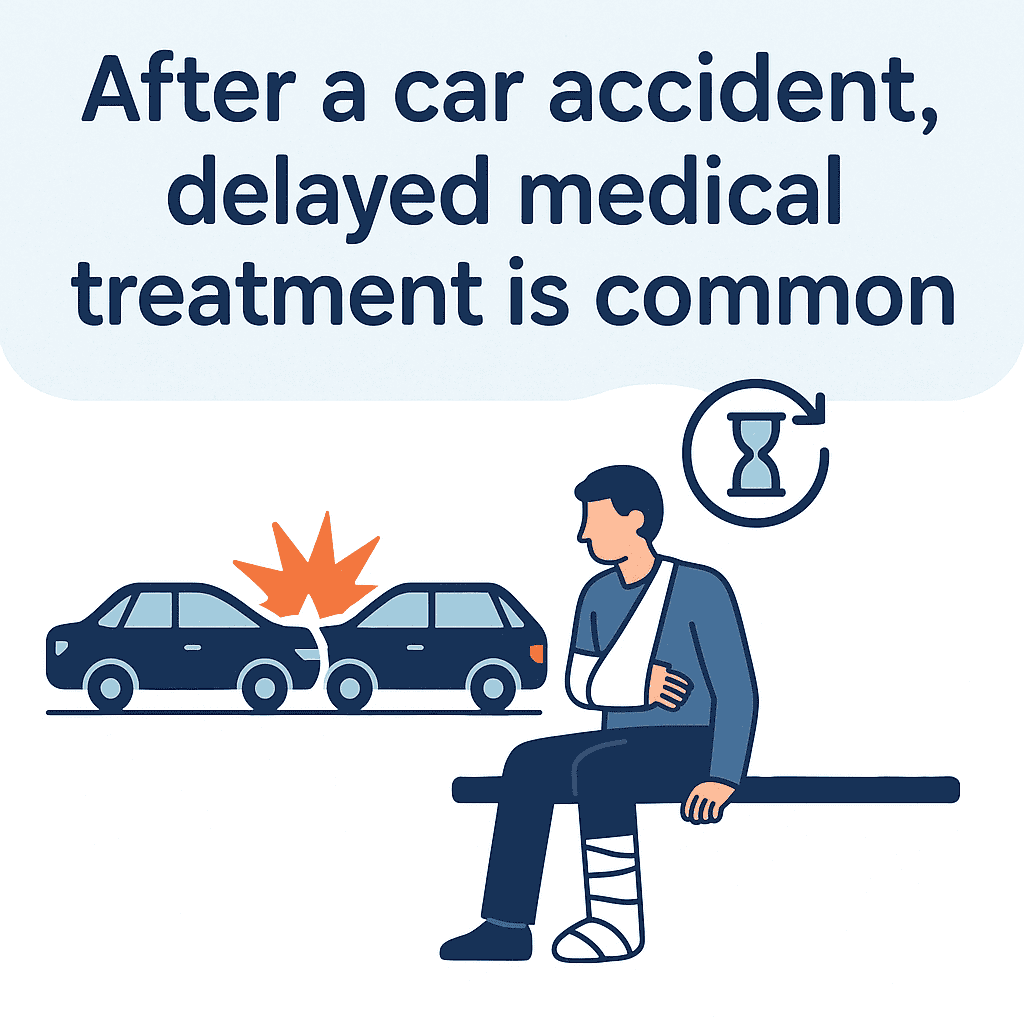
Why Many People Don’t Seek Treatment Immediately
Following a collision, several factors can cause someone to delay medical care.
Adrenaline and Shock
The body releases adrenaline after a traumatic event. Adrenaline can temporarily mask pain and injury symptoms. Many people feel relatively normal immediately after a crash, only to develop stiffness or pain hours — or even days — later.
Gradual Onset of Symptoms
Certain injuries develop symptoms slowly. Soft tissue injuries, spinal disc injuries, and nerve irritation often worsen over time as inflammation increases. What initially feels like mild soreness may later develop into persistent pain, numbness, or limited mobility.
People Expect the Pain to Go Away
Most individuals assume they will recover quickly. They may try to manage symptoms with rest, over-the-counter medication, or limited activity before seeking medical attention. This instinct is understandable. Many people want to avoid unnecessary medical visits unless symptoms persist.
Financial and Practical Concerns
Medical care can be expensive and inconvenient.
Some people delay treatment because they:
- Don’t have immediate access to healthcare
- Are worried about medical costs
- Need to return to work quickly
- Are caring for family responsibilities
These real-world factors often influence treatment timing.
What Actually Matters in an Injury Case
In litigation, timing alone rarely determines whether an injury is legitimate.
Courts and juries typically focus on several more meaningful questions:
- Are the symptoms consistent over time?
- Do the medical findings match the reported symptoms?
- Do imaging studies support the injury?
- Do treating physicians connect the injury to the accident?
- Has the injury affected the person’s daily life?
When these factors align, a delay in treatment becomes far less important.
Medical Evidence Often Develops Over Time
Many accident cases follow a familiar progression:
- The collision occurs
- Symptoms appear gradually
- Conservative care begins
- Symptoms fail to fully resolve
- Imaging later reveals structural injury
MRI scans, nerve studies, and specialist evaluations frequently occur weeks or months after the accident. That timeline reflects normal medical practice — not necessarily a weak claim.
How Insurance Companies Use Treatment Gaps
Insurance carriers often emphasize treatment delays for one reason: it creates doubt.
Adjusters may argue that:
- The injury must have come from something else
- The symptoms were minor
- The person wasn’t truly injured
But those arguments must ultimately be evaluated alongside the full medical record. When the medical evidence is clear and consistent, timing arguments carry far less weight.
The Importance of Proper Evaluation
If symptoms persist after an accident, seeking medical evaluation is important.
Early documentation can help clarify:
- the cause of the injury
- the nature of the injury
- appropriate treatment options
- whether additional diagnostic testing is necessary
Both medical providers and experienced legal counsel can help ensure the injury is properly understood.
The Bottom Line
Delayed medical treatment is common after car accidents. People may initially feel fine, hope symptoms will resolve, or face practical barriers to immediate care. What ultimately determines the strength of a claim is the medical evidence, the consistency of symptoms, and the real-world impact of the injury — not simply how quickly someone saw a doctor.