
Golf Cart Accident Lawyer
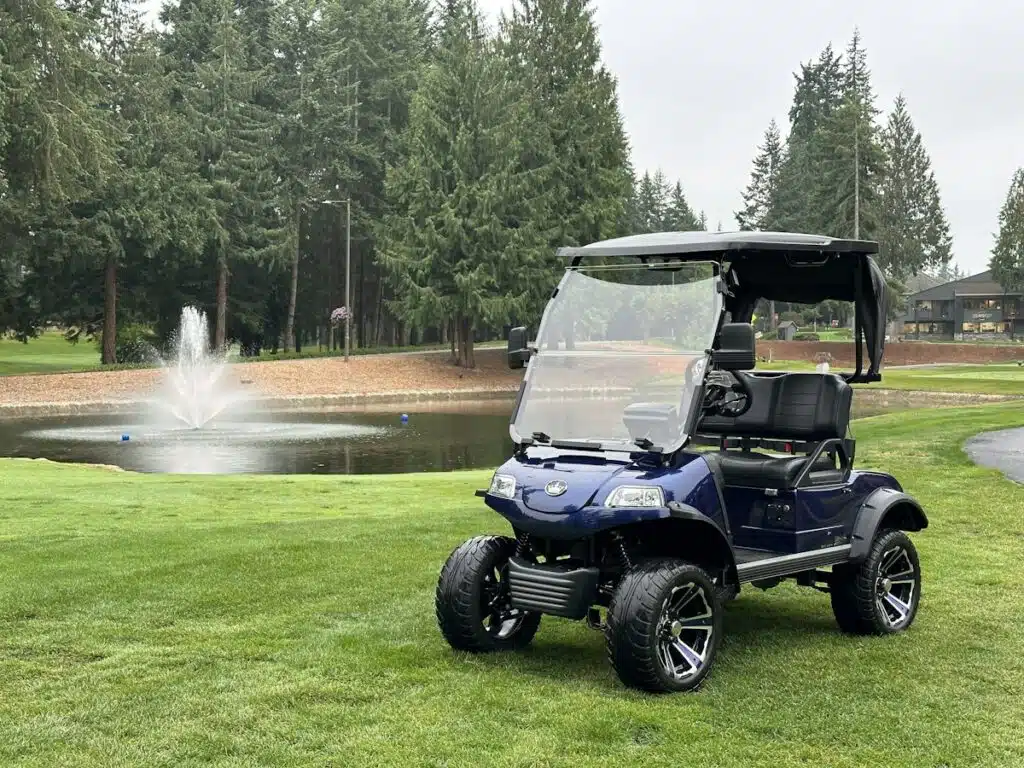
Austin Golf Cart Accident Lawyer
Golf carts feel harmless — low speed, open air, easy to drive. But they offer almost none of the protection a car does: no seatbelts in most models, no doors, no airbags, and a much higher risk of tipping over in a sharp turn. When a golf cart accident happens, the injuries are often disproportionately serious compared to how “minor” the vehicle looks. If you were hurt in a golf cart accident in the Austin area, the legal rules are more specific — and more often misunderstood — than most people expect.
Golf Carts Are Legal on Some Public Roads — With Real Limits
Under Texas Transportation Code Chapter 551, a golf cart can legally be driven on a public road with a posted speed limit of 35 mph or less, but only during daylight hours and generally only within 5 miles of where the cart is normally parked, or on a direct route to and from a golf course. Cities and counties can also formally authorize golf carts on their roads under separate rules, sometimes with added equipment requirements like headlights and mirrors. A golf cart driven outside these limits — at night, too far from home, or on a higher-speed road without local authorization — is being operated illegally, which can be directly relevant to a negligence claim.
Yes, You Need a Driver’s License
This surprises a lot of people: Texas Attorney General Opinion KP-0364 confirmed that a valid driver’s license is required to operate a golf cart on a publicly maintained road open to vehicle traffic, even in the areas where golf carts are otherwise legally permitted. An unlicensed driver — often a minor operating a family golf cart — behind the wheel at the time of your accident can be an important fact in your case.
Golf Carts vs. Low-Speed Vehicles: Not the Same Thing
Texas law actually distinguishes a bare golf cart from a “low-speed vehicle” (LSV) or neighborhood electric vehicle — a separate, more regulated category of vehicle that has to meet federal safety standards (seatbelts, headlights, turn signals, a VIN) that an ordinary golf cart doesn’t. LSVs are limited to a 2-mile radius rather than 5, but come with real safety equipment a standard golf cart lacks. Knowing which category the vehicle in your accident actually falls into — and whether it met the legal requirements for that category — matters for figuring out what went wrong.
Common Causes of Golf Cart Accidents
- Rollovers from sharp turns or uneven terrain — golf carts have a high center of gravity and no seatbelts in most models
- Collisions with cars at intersections, where a golf cart’s low visibility and slow speed create a serious mismatch
- Ejection of passengers, especially children, during sudden stops or turns
- Operation by an unlicensed or underage driver
- Alcohol involvement — golf carts are commonly used at social gatherings where this becomes a factor
- Defective carts — brake failure, steering defects, or manufacturing issues
Insurance Can Be a Real Problem in These Cases
Golf carts are generally exempt from Texas’s standard auto insurance requirements, though some cities add their own local insurance rules as a condition of on-road use. That means the driver who hit you may not have any applicable insurance at all — which makes your own policy’s uninsured/underinsured motorist coverage, and a careful look at homeowner’s or umbrella policies, an important part of figuring out how you actually get compensated.
Why The Traub Law Office?
Golf cart accident cases require untangling questions most car accident claims never raise: was the cart legally allowed on that road, was the driver licensed, and where does the insurance coverage actually come from. We sort through all of it and fight for the full compensation you deserve. We take these cases on contingency: no fee unless we recover money for you.
If you were injured in a golf cart accident in the Austin area, call the Traub Law Office at (512) 246-9191 for a free consultation.